
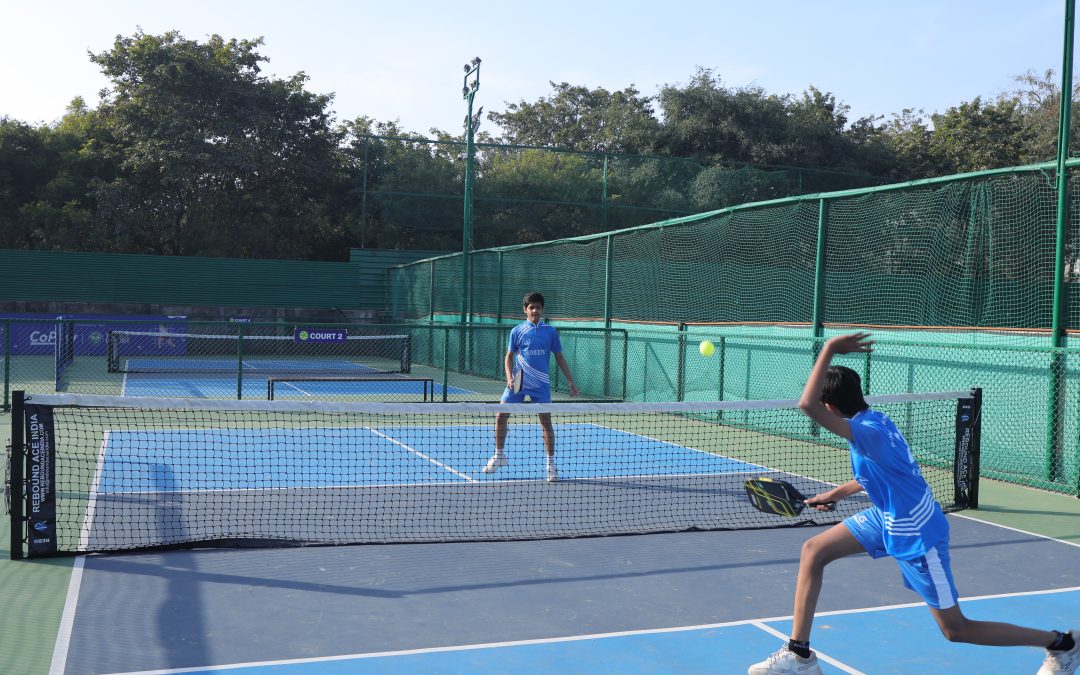
Ask most parents what makes a good school in Faridabad, and the conversation usually turns to board results, smart classrooms, and exam scores. Sports and physical education often get mentioned last, almost as an extracurricular bonus rather than a core part of learning. Yet a growing body of research, along with the everyday experience of teachers, points to something parents intuitively know but rarely connect to academics: a child who runs, jumps, plays, and competes regularly tends to concentrate better, manage stress more effectively, and perform better in the classroom too.
This blog looks at why physical education deserves a central place in a child’s school life, how it directly supports academic performance, and what parents should look for when evaluating the best CBSE school in Faridabad for a child who needs both books and playgrounds to thrive.
The science: How does physical activity sharpen the brain?
Physical activity increases blood flow to the brain, which in turn supports the regions responsible for memory, attention, and problem-solving. When children run laps, play a team sport, or simply spend time in unstructured outdoor play, their bodies release chemicals that improve mood, reduce anxiety, and sharpen focus for the hours that follow. This is not a minor side effect — it is one of the most consistent findings in educational research over the past two decades.
For students juggling long school days, tuition classes, and homework, this matters enormously. A 30-to-40-minute physical education period is not time taken away from academics; it is time invested in making the next few hours of learning more productive. Children who are physically active tend to fall asleep more easily, sleep more soundly, and arrive at school the next day better rested and more alert — all factors that feed directly into classroom performance.
This is precisely why thoughtful CBSE schools in Faridabad no longer treat the games period as optional or as something to be cancelled whenever the syllabus runs behind schedule. Instead, physical education is built into the timetable as a non-negotiable part of the week, on par with any academic subject.
Beyond fitness: The classroom skills sport quietly builds
When a child steps onto a field, court, or track, they are not just exercising — they are practising skills that translate directly into how they approach schoolwork. A relay race teaches a child to perform under pressure. A team sport teaches them to communicate, take turns, and handle both winning and losing gracefully. Athletics and gymnastics build patience, as improvement comes through repetition rather than instant success.
These are the same qualities that show up later in a classroom: a student who has learned to bounce back from a missed goal is often better equipped to handle a disappointing test score and try again rather than give up. A student used to following the rules of a game, respecting a coach’s instructions, and working as part of a team often finds it easier to follow classroom routines, collaborate on group projects, and respect a teacher’s guidance.
This is one of the less-discussed reasons why the best school in Faridabad invests heavily in sports infrastructure — not because every student will become a professional athlete, but because the discipline, resilience, and teamwork built on the field carry over into every subject on the timetable.
What does a good sports infrastructure look like?
Infrastructure plays a bigger role in this story than most parents realise. A school that talks about the importance of sport but offers only a small, shared patch of ground sends a very different message than one that has invested in dedicated facilities. This is often one of the quiet differentiators between an average institution and the best school in Faridabad for a particular family’s needs. Homerton Grammar School, for example, sits on a 5-acre campus that includes a 2-acre indoor & outdoor sports complex — a scale that allows multiple activities to run simultaneously, from athletics and football to indoor games, without students having to wait for their turn week after week.
Dedicated space matters because it changes how often and how seriously physical education is taken. When facilities are limited, game periods are often the first casualty of a busy academic calendar. When a school has the space and the staff to run physical education as a proper subject — with qualified coaches, structured sessions, and inter-house or inter-school competitions — students get consistent, meaningful exposure rather than occasional free time on the field.
This is one of the markers that consistently separates a top school in Faridabad from one that simply has a playground. The presence of well-maintained grounds, equipment for multiple sports, and a calendar of sports events signals that physical education is treated as part of the academic programme, not an afterthought squeezed in when time permits.
The early years: Why play comes before the page?
For very young learners, movement is not separate from learning — it is how learning happens. A child who runs, climbs, balances, and plays group games is developing coordination, spatial awareness, and the kind of focus that later makes it easier to sit, listen, and follow instructions in a classroom. This is why parents researching nursery admission in Faridabad should pay close attention to how much outdoor and structured play time is built into the daily routine, not just which alphabet worksheets are used.
A genuinely strong top primary school in Faridabad will balance structured academic time with generous amounts of physical activity — morning assemblies with movement-based warm-ups, regular games periods, and age-appropriate sports training. At this stage, the goal is not competitive performance but building a lifelong comfort with movement, teamwork, and following simple rules, all of which quietly prepare a child for the more structured academic demands that follow in the primary years.
Schools that get this balance right in the early years tend to see the benefits show up later: children who are used to moving, playing, and being part of a team often settle into the routines of a top primary school in Faridabad with less anxiety and more enthusiasm than those whose early years were entirely desk-bound.
Sport and the CBSE curriculum
Physical education is not an add-on within the CBSE framework — it is a recognised part of the curriculum, with health and physical education periods, sports days, and house competitions forming part of a student’s overall school experience. Across CBSE schools in Faridabad, this typically includes a mix of athletics, team games, yoga, and fitness assessments, designed to keep students active throughout the year rather than only during an annual sports day.
Many CBSE schools in Faridabad Haryana also use inter-house and inter-school tournaments as a way to build school spirit and give students a reason to train consistently rather than only when an exam is far away. For older students, this regular rhythm of training and competition often becomes one of the few parts of the school week that genuinely recharges them — which, in turn, supports better concentration in the classes that follow.
At Homerton, this is reflected in a broader, child-centric philosophy that runs from Pre-Nursery to Class XII — one where robotics labs, AI and coding programmes, and academic rigour sit alongside a strong sports culture, rather than competing with it. The underlying idea is simple: a school in Faridabad that wants its students to excel academically cannot afford to treat the body and the mind as separate concerns.
What parents should ask before choosing a school?
If you are comparing options and want a school that takes the link between sport and academics seriously, a few questions can reveal a lot:
- How many physical education periods does each grade get per week, and are they ever cancelled for extra academic classes?
- What sports facilities does the campus have, and how many students share them at a time?
- Are there qualified sports coaches, and do students get opportunities to compete in inter-house or inter-school events?
- Is physical activity built into the daily routine for younger children, not just scheduled as an occasional activity?
Schools that can answer these questions clearly, with visible infrastructure and a consistent timetable, are usually the ones where physical education is treated as seriously as any other subject — and where the academic benefits of that approach are most likely to show up in a child’s performance over time.
Admissions: Where sport fits into the bigger picture?
For families going through CBSE school admission in Faridabad, sports infrastructure is often discovered only during a campus visit — yet it is one of the most telling things to observe. A walk around the grounds, a look at the sports complex, and a conversation about how often classes use these spaces can tell you more about a school’s real priorities than any prospectus. In fact, this is one part of the CBSE school admission in Faridabad process that parents are encouraged not to rush through.
The admission process itself typically follows a familiar pattern: an enquiry or application form, an age-appropriate interaction or assessment, document verification, and registration. But within that process, it is worth asking specifically how physical education and sports fit into the daily schedule for the grade your child will join — because this is one area where the difference between schools can be significant, even when their academic results look similar on paper.
For the youngest applicants, this is equally true during nursery admission in Faridabad. Ask how much of the daily routine is spent on free play, outdoor activity, and movement-based learning, since these early habits often shape how comfortably a child settles into the more structured academic life that follows in later grades.
Frequently Asked Questions
Does spending time on sports take away from study time?
Not when it is balanced well. Most schools that are recognised as a top school in Faridabad treat physical education as a fixed, protected part of the timetable rather than something that competes with study hours. The improved focus, mood, and sleep that come with regular activity often make the remaining study hours more productive, which is why the time spent on sport is rarely time lost.
How can I judge whether a school takes physical education seriously?
Look at the infrastructure, the weekly timetable, and how often the school holds sports days, inter-house matches, or tournaments. A best CBSE school in Faridabad will usually be happy to show you its sports facilities during a campus visit and explain how physical education periods are structured across different grades.
Is physical education equally important for younger children applying for nursery admission in Faridabad?
Yes, arguably even more so. At the nursery and primary stage, movement-based play builds the coordination, attention span, and social skills that later support classroom learning. A good top primary school in Faridabad will weave physical activity into the daily routine from the very first year, not introduce it later as a separate subject.
Are sports facilities similar across most CBSE schools in Faridabad Haryana?
They vary considerably. While the CBSE curriculum sets expectations around physical education for all CBSE schools in Faridabad Haryana, the actual quality of grounds, equipment, and coaching depends heavily on individual school investment. This is why visiting the campus and asking direct questions is far more useful than relying on the curriculum description alone.
Conclusion: A healthy body builds a sharper mind
The idea that academics and athletics are separate tracks — one for the classroom, one for the field — is slowly giving way to a more accurate picture: children think better when they move regularly, and they cope better with the pressures of school life when sport gives them an outlet, a team, and a sense of achievement that has nothing to do with marks.
For parents evaluating a school in Faridabad, this means looking past the marketing language about “holistic development” and checking for the concrete signs: dedicated sports spaces, protected timetable hours, qualified coaches, and a culture where competing, training, and playing are valued in their own right.
Whether you are exploring nursery admission in Faridabad for a toddler or comparing options for an older child moving between CBSE schools in Faridabad, the presence of a genuine sports culture is one of the clearest signals of a school that understands what truly supports academic performance — a healthy, active, well-rounded child.