
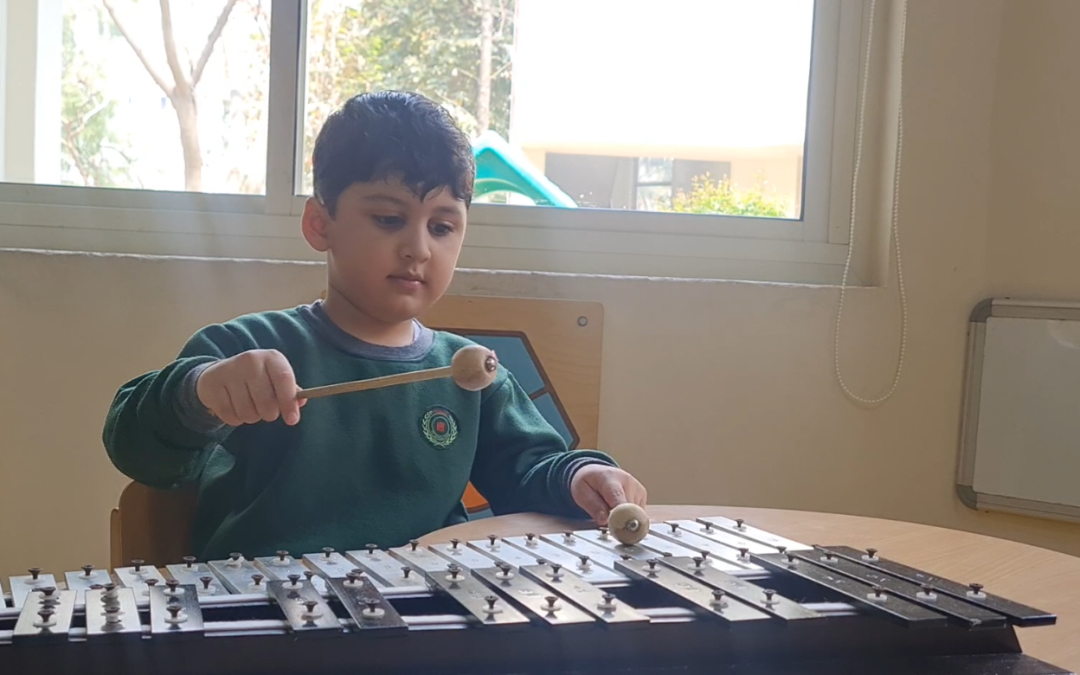
It’s 4 PM, and the debate begins again in households across Faridabad: should your child head to a coaching centre for an extra hour of Mathematics, or should they go for football practice, dance class, or that art workshop they’ve been asking about? For most parents, this isn’t a one-time decision — it’s a daily balancing act between academic pressure and holistic development.
If you’re researching this topic, chances are you’re also evaluating schools — perhaps looking for a school in Faridabad that doesn’t force you to choose between the two in the first place. The truth is, the right school environment can significantly reduce the need for external coaching while still nurturing your child’s talents through structured after-school activities.
In this article, we’ll break down the real differences between after-school activities and coaching classes, look at what child development experts say, and help you understand what to prioritise at different stages of your child’s education. We’ll also touch on why choosing the best CBSE school in Faridabad with a strong co-curricular framework can make this entire dilemma far less stressful for both you and your child.
Whether you’re a long-time resident or have just relocated and are comparing CBSE schools in Faridabad for the first time, this guide is designed to help you make a confident, well-informed decision — not just for this academic year, but for your child’s entire school journey. And if you’re in the middle of the CBSE school admission in Faridabad process right now, understanding this balance can also help you ask the right questions during your school visits.
Understanding the two worlds: Coaching classes vs. After-school activities
Before comparing the two, it helps to define them clearly, because parents often lump them together when they serve very different purposes.
What are coaching classes?
Coaching classes are supplementary academic sessions focused on reinforcing classroom subjects — Mathematics, Science, English, or exam-specific preparation for boards, Olympiads, or entrance tests. They are typically:
- Subject-focused and exam-oriented
- Structured around syllabus completion and test performance
- Often repetitive, involving practice papers and drilling
- Driven by short-term academic goals
What are after-school activities?
After-school activities cover a much broader spectrum — sports, music, dance, art, robotics, drama, debate, chess, swimming, and more. These activities are:
- Skill and interest-based rather than syllabus-based
- Focused on physical, emotional, social, and creative development
- Often collaborative, involving teamwork and peer interaction
- Aimed at long-term personality and skill development
Both have their place. The real question isn’t “which one is better” in isolation — it’s “which one does your child need more right now, and in what proportion?”
Why this decision matters more than you think?
Many parents assume that more academic input always equals better results. But research in child psychology and education consistently shows that over-scheduling a child with academic coaching, without enough time for play, movement, and creative expression, can lead to:
- Increased anxiety and burnout, even in primary school children
- Reduced attention span and motivation in the classroom
- Poor sleep quality due to late-evening study sessions
- Limited development of soft skills like communication, teamwork, and resilience
On the other hand, after-school activities — when chosen thoughtfully — contribute to:
- Better focus and academic performance (yes, really — physical activity boosts cognitive function)
- Stronger emotional regulation and confidence
- Development of leadership, teamwork, and time-management skills
- A more balanced, happier childhood overall
This is why education experts increasingly recommend that schools themselves integrate strong co-curricular programmes into the regular school day, rather than leaving parents to “outsource” this development through after-school coaching and activity centres.
The case for after-school activities
1. Holistic development over rote learning
A child who spends time on the football field, in a music room, or building a robot with classmates is learning far more than just that specific skill. They’re learning how to lose gracefully, how to lead a team, how to manage frustration, and how to communicate ideas. These are exactly the skills that employers, universities, and life in general demand — and they’re notoriously hard to teach through textbooks.
2. Discovering hidden talents
Many children don’t know what they’re good at until they’re exposed to it. A shy child might discover a flair for public speaking through a debate club. A restless child might find calm and focus through classical dance or art. Schools that offer a wide range of activities — from Faridabad’s top schools offering options like robotics labs, sports academies, music rooms, and art studios — give children the chance to explore before they’re forced to specialise.
3. Stress relief, not stress addition
Unlike coaching, which often feels like “more school,” after-school activities are usually perceived by children as a break — something they look forward to. This shift in mindset matters enormously for mental health, especially as academic pressure increases in middle and senior school.
4. Building social skills
In an age where screen time often replaces playtime, structured activities like team sports, group music classes, or drama clubs give children essential face-to-face social interaction — something that’s increasingly rare and increasingly valuable.
The case for coaching classes (And when they make sense)
Coaching classes aren’t inherently bad — they have a legitimate place, particularly in specific situations:
1. Bridging learning gaps
If a child has missed school due to illness, struggled with a particular concept, or is transitioning between curricula (say, moving to a CBSE school in Faridabad Haryana, from a different board), short-term, targeted coaching can help them catch up without falling behind permanently.
2. Board exam years
For students in Classes 9 to 12, especially during board exam years, some additional academic support — particularly for subjects like Mathematics and Science — can be genuinely helpful, provided it doesn’t completely replace rest, sleep, and physical activity.
3. Competitive exam preparation
For students aiming for specific competitive exams (JEE, NEET, Olympiads), specialised coaching is often necessary, as schools alone may not cover the depth required. However, even here, balance is key — students who maintain some physical activity and hobbies during exam preparation years often perform better and report lower stress levels than those who study exclusively.
The problem with “coaching for everything”
The issue arises when coaching becomes the default for every subject, every year, regardless of whether the child is actually struggling. This often happens due to peer pressure (“everyone in the neighbourhood goes for tuition”) or a lack of confidence in the school’s own teaching quality.
This is precisely why the choice of school matters so much.
How the right school reduces the need for external coaching?
When parents search for the best school in Faridabad, academic results are usually the first filter. But there’s a second, equally important filter that often gets overlooked: does the school’s teaching methodology reduce dependency on outside tuition?
Here’s what to look for:
Smaller class sizes and individual attention
Schools with manageable student-teacher ratios can identify struggling students early and provide in-class support, rather than letting gaps widen until a tuition centre becomes “necessary.”
Doubt-clearing sessions and remedial classes
Many quality CBSE schools now build doubt-clearing periods into the regular timetable — essentially providing the benefits of coaching within the school day itself, at no extra cost or time burden on the child.
Activity-integrated timetables
Rather than treating sports, music, and art as “extra” subjects squeezed in if time permits, well-structured schools timetable these activities as core parts of the week — ensuring every child gets exposure without parents needing to arrange separate classes after school hours.
Teacher quality and pedagogy
A school with experienced, well-trained faculty that uses activity-based and concept-based learning (rather than purely lecture-and-notes methods) naturally produces students who need less external reinforcement.
At Homerton Grammar School, Faridabad, top rated schools in Faridabad, this philosophy is built into the daily structure — academics, sports, arts, and life-skills programmes are woven together rather than treated as separate tracks. The idea is simple: a child who is engaged, active, and supported during school hours has both the energy and the motivation to learn well, without being pushed into a cycle of all-day academics followed by evening tuition.
A practical framework: How to decide for your child?
Rather than a blanket rule, here’s a practical way to think through the decision based on age and need.
Nursery to Class 2: Activities first, always
At this stage, the priority should be 100% on play-based learning, motor skill development, and social interaction. Formal coaching has no place here. If you’re exploring nursery admission in Faridabad, look for schools that emphasise activity-based early learning, sensory play, and creative expression — this is the foundation for everything that comes later.
Class 3 to 5: Mostly activities, minimal academic support
Children in this age group benefit enormously from sports, music, art, and early exposure to things like coding or robotics. Coaching, if needed at all, should be occasional and gap-specific — not a routine.
Class 6 to 8: Balanced approach
This is a good time to start identifying a child’s interests more seriously — whether that’s a sport they want to pursue competitively, an instrument they want to master, or a subject where they consistently need extra support. The ratio should still favour activities, but light academic reinforcement can begin if genuinely needed.
Class 9 to 12: Academics take more space, but don’t eliminate activities
During board years, academic focus naturally increases. However, completely dropping all physical and creative activities is counterproductive. Even 30-45 minutes of physical activity or a hobby a few times a week helps maintain focus, reduce stress, and improve overall academic output.
Questions to ask when choosing a school
If you’re currently comparing CBSE schools in Faridabad for your child’s admission, here are some practical questions that go beyond just “what’s the fee structure”:
- What co-curricular activities are part of the regular timetable (not just annual day performances)?
- How does the school handle students who are falling behind — is there in-school remedial support?
- What is the average class size, and how does this affect individual attention?
- Are sports, art, and music facilities actually used regularly, or just showcased during admissions?
- Does the school offer activities like robotics, coding, or STEM labs that align with future skill needs?
- How does the school communicate a child’s progress — both academic and behavioural — to parents?
A school that can answer these confidently is more likely to reduce your dependence on after-school coaching centres — and is often a strong indicator that you’re looking at one of the best CBSE schools in Faridabad, rather than just one with the loudest marketing.
Why Faridabad parents are rethinking their choices?
Faridabad has seen significant growth in its education landscape over the past decade, with many institutions positioning themselves as a top school in Faridabad or the best CBSE school in Faridabad. With this growth comes more choice — but also more confusion for parents trying to separate genuine educational value from marketing claims.
The trend among informed parents is shifting towards English medium schools in Faridabad that offer:
- A genuinely balanced curriculum (not just academics-heavy marketing)
- Strong CBSE affiliation with consistent, transparent results
- Visible investment in sports, arts, and extracurricular infrastructure
- A culture where children are excited to go to school — not just sent there
This shift makes sense. As private school admission in Faridabad processes become more competitive, parents are doing deeper research, visiting campuses, talking to current parents, and looking at how children actually spend their day — not just exam results.
Finding the right balance: A realistic approach
Here’s a practical takeaway for parents navigating this decision:
- Don’t eliminate activities for academics, or vice versa. Both serve different, complementary purposes.
- Use coaching as a tool, not a default. If your child is doing well in school and engaging with their activities, additional coaching may not add value — it might just add stress.
- Talk to your child’s class teacher regularly. They often have the clearest picture of where your child genuinely needs support versus where pressure is coming from comparison with peers.
- Prioritise schools that build activities into the school day. This single factor can dramatically reduce the after-school scramble between homework, tuition, and activity classes.
- Watch for signs of burnout — irritability, reluctance to go to school, sleep issues, or declining interest in things they used to enjoy. These are often signs of an overloaded schedule, regardless of whether that load comes from coaching or too many activities.
Conclusion
The “after-school activities vs. coaching classes” debate doesn’t have to be an either-or decision. The real goal is balance — giving your child enough academic support to feel confident in class, while ensuring they have the time, energy, and opportunity to grow as well-rounded individuals through sports, arts, and creative pursuits.
Choosing a school in Faridabad that already integrates this balance into its daily structure makes life significantly easier for both children and parents. Schools like Homerton Grammar School, a top primary school in Faridabad, approach education with this philosophy at the core — combining strong CBSE academics with a genuine emphasis on sports, arts, and life skills, so that families aren’t left scrambling to fill gaps after the school bell rings.
If you’re currently exploring CBSE school admission in Faridabad, whether for nursery admission in Faridabad or for older grades, take the time to visit campuses, ask the questions outlined above, and observe how a typical school day actually looks. The right environment can make this entire debate far less stressful — for your child, and for you.