
Choosing a school is about much more than academics, infrastructure and extracurricular activities. For many parents, especially those with working schedules, school transportation is an equally important part of the decision. A child may spend a significant amount of time travelling between home and school, which means the journey itself should be safe, supervised and well-managed.
When parents compare CBSE schools in Faridabad, school transport safety should therefore be one of the key factors on their checklist. A school may have excellent classrooms, laboratories, sports facilities and academic results, but parents also need to ask: How safely will my child travel to and from school every day?
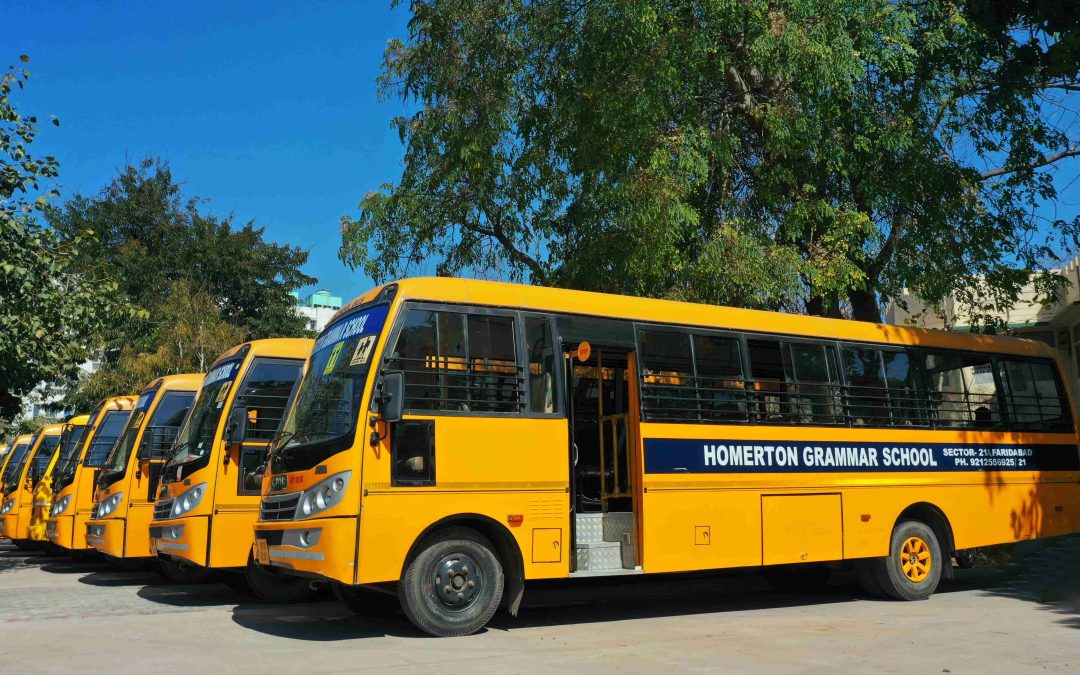
At Homerton Grammar School, Faridabad, transportation is treated as an important part of the overall student experience. The school’s transport facility includes fully air-conditioned buses, GPS tracking, CCTV cameras, first-aid kits, trained drivers and female attendants. The school also highlights trained transport staff, including supervisors, drivers and conductors, to support safe pick-up and drop-off.
But what exactly should parents look for when evaluating school transportation?
Here is a practical guide to help parents make a more informed decision.
Why does school transport safety matter?
For a child, the school journey is more than simply travelling from one location to another. It is a daily routine that involves boarding the vehicle, sitting safely, interacting with other students, travelling through traffic and getting off at the designated stop.
This makes transportation an extension of the school’s responsibility towards student safety.
The Central Board of Secondary Education (CBSE) has issued specific guidelines concerning the safety of children travelling in school buses and emphasises that safe school transport should be treated as an important safety objective by affiliated schools.
The Government of India has also prescribed safety-related requirements for school buses, including specifications relating to emergency exits, seating arrangements, stopping signals and other vehicle features.
For parents searching for the best CBSE school in Faridabad, this means school transport deserves the same careful attention as academics, facilities and teaching methodology.
1. Check whether the school provides dedicated school transport
The first question parents should ask is whether the school operates or manages a dedicated school transportation system.
A structured school transport facility can make the daily commute more organised because routes, pick-up points, staff responsibilities and student movement can be managed through a defined system.
Parents should ask:
- Does the school operate its own buses or use an external transport provider?
- How are transport operators selected?
- Are routes planned according to student locations?
- Who supervises the transportation system?
- How are new students added to routes?
- What happens if a bus is delayed or unavailable?
A school that can clearly explain its transport system demonstrates that transportation is being treated as a planned service rather than an afterthought.
2. Inspect the condition of the school buses
Parents should not hesitate to ask about the condition and maintenance of school buses.
A school bus should be appropriately maintained and should meet applicable transport and safety requirements. CBSE guidance also emphasises that school buses should be maintained in good functional condition and that appropriate safety measures should be followed.
During a school visit, parents can ask whether buses undergo:
- Regular maintenance checks
- Fitness inspections
- Tyre and brake checks
- Electrical system checks
- Cleaning and hygiene checks
- Emergency equipment checks
- Periodic safety inspections
The objective is not simply to find a bus that looks new. It is to understand whether the school follows a consistent maintenance and safety process.
3. Look for GPS tracking
Technology can provide an additional layer of reassurance for parents.
GPS tracking allows the school to monitor the movement of its buses and can help transport teams know where a vehicle is during its journey. For working parents, this can be particularly useful because they may not always be available to personally accompany their child to or from school.
Homerton Grammar School’s transport facility includes GPS tracking, allowing the transportation system to be monitored during the journey. The school’s published transport information also highlights technology-enabled safety measures as part of its transportation infrastructure.
Parents should ask:
- Is GPS available on every school bus?
- Who monitors the tracking system?
- Can parents receive route or arrival updates?
- What happens if the bus deviates from its planned route?
- Is there a procedure for responding to unexpected delays?
These questions help parents understand how technology is actually used rather than simply whether it is available.
4. Check for CCTV surveillance
CCTV cameras can provide another layer of accountability inside school buses.
When children travel together, responsible supervision is essential. CCTV can help schools monitor activity inside the vehicle and support investigations if an incident occurs.
Parents should ask whether cameras are installed on buses and whether the school has a defined process for monitoring and reviewing footage.
At Homerton Grammar School, the transport facility includes CCTV cameras, alongside GPS tracking and other safety provisions.
It is also worth asking whether CCTV is operational throughout the journey and how recordings are managed.
5. Ask who accompanies the children
One of the most important questions parents should ask is: Who is responsible for students while they are travelling?
A driver has the responsibility of operating the vehicle safely. However, supervising children inside the bus is a separate responsibility.
Parents should therefore ask whether the bus has a trained attendant or conductor and whether younger children receive additional supervision.
Homerton Grammar School states that its transportation system includes trained drivers, conductors and attendants. Its recent transport information also specifically mentions female attendants, particularly as part of supporting younger students.
For parents considering nursery admission or primary school admission in Faridabad, this can be especially important because younger children may need additional assistance while boarding, travelling and getting off the bus.
6. Ask about driver and staff training
The safety of a school bus depends not only on the vehicle but also on the people operating and supervising it.
Parents should ask whether drivers:
- Hold the required licences
- Are trained for school transportation
- Understand child-safety protocols
- Follow prescribed speed limits
- Receive periodic training or briefings
- Know how to respond to emergencies
Similarly, parents should understand the responsibilities of attendants and conductors.
CBSE guidance specifically highlights the importance of trained drivers, regular licensing and transport management procedures.
A good school should be able to explain its expectations from transport personnel clearly.
7. Check emergency preparedness
No parent wants to think about an emergency, but responsible school selection requires asking what would happen if one occurred.
Parents should ask whether every bus has:
- A first-aid kit
- Fire-safety equipment
- Emergency exits
- Emergency contact information
- A communication mechanism
- Clearly defined emergency procedures
CBSE’s school safety guidance emphasises the availability of first-aid facilities and appropriate safety measures in school buses.
The Ministry of Road Transport and Highways has also introduced requirements concerning fire detection and fire protection systems for school buses.
Homerton Grammar School’s published transportation information states that its buses are equipped with first-aid kits.
Parents should also ask a simple but important question: Who contacts the parent if there is an emergency?
Clear communication can make a major difference during an unexpected situation.
8. Understand the pick-up and drop-off process
School bus safety does not begin when the bus starts moving. It begins when a child leaves home and continues until the child reaches the designated destination.
Parents should understand:
- How pick-up points are decided
- Whether children are dropped only at designated locations
- Who supervises younger children
- How the school verifies the authorised person receiving a child
- What happens if a parent or guardian is not available
- How changes in pick-up arrangements are communicated
These procedures become particularly important for younger students.
Parents should also ensure that children understand basic bus safety rules, including remaining seated, following the attendant’s instructions and waiting until the vehicle has stopped before getting down.
9. Check whether bus routes are practical
A safe bus should also provide a practical daily commute.
An excessively long journey may leave a child tired before the school day even begins.
When evaluating school admission in Faridabad, parents should consider:
- Distance between home and school
- Estimated travel time
- Number of stops
- Traffic conditions
- Route coverage
- Pick-up and drop-off timings
Ask the school whether routes are reviewed periodically as student locations change.
For working parents, predictable transportation can also make the entire school routine easier to manage.
10. Ask about communication between school and parents
Parents should know how the school communicates transport-related information.
A strong communication system should make it possible to receive important updates concerning:
- Route changes
- Bus delays
- Driver or attendant changes
- Emergency situations
- Holiday schedules
- Pick-up or drop-off changes
At Homerton Grammar School, transport is part of a broader parent-support approach that recognises the needs of modern families. The school has specifically highlighted its transport facilities as a support for working parents, including GPS tracking, CCTV, attendants, first-aid provisions and trained transport personnel.
For parents balancing work and family responsibilities, reliable communication can provide valuable peace of mind.
11. Consider safety for younger children
Transport requirements can vary significantly according to age.
A child in Early Years may require more supervision than a teenager travelling independently.
Parents considering nursery admission in Faridabad should therefore ask specific questions about:
- Female attendants
- Boarding and drop-off supervision
- Assistance with school bags
- Communication with parents
- Designated pick-up points
- Emergency contact procedures
Homerton Grammar School’s transport information specifically highlights trained staff and female attendants for younger students.
This kind of age-appropriate support can make the transition to school transportation more comfortable for young children.
12. Ask whether students are taught bus and road safety
Safety is not only about infrastructure. Children also need to understand how to behave responsibly while travelling.
Schools can reinforce habits such as:
- Staying seated while the bus is moving
- Keeping aisles clear
- Not leaning out of windows
- Listening to the bus attendant
- Waiting for the bus to stop completely
- Boarding and getting down calmly
- Following designated pick-up and drop-off procedures
Delhi Traffic Police guidance also emphasises that parents and schools share responsibility for teaching children safe road-use behaviour and ensuring that children are supervised while boarding and leaving school buses.
A school that combines physical safety measures with safety education creates a stronger culture of responsibility.
13. Ask about school bus speed and driving practices
Parents should also ask how the school ensures responsible driving.
India’s Ministry of Road Transport and Highways has prescribed a 60 km/h speed limit for school buses and has established safety requirements applicable to school buses.
Parents can ask whether the school uses speed monitoring or other systems to encourage responsible driving.
The important point is not simply knowing the speed limit. It is understanding whether the school has systems in place to ensure that drivers consistently follow safety requirements.
14. Look beyond the bus: Check the school’s overall safety culture
Transportation should not be considered in isolation.
A school’s approach to safety should extend across:
- Campus entry and exit
- Visitor management
- CCTV monitoring
- Emergency preparedness
- First aid
- Student supervision
- Transport
- Parent communication
CBSE requires affiliated schools to observe applicable state and local requirements relating to safety, health, hygiene, fire safety, building safety and transport precautions.
This is why parents should look for consistency. A school that takes safety seriously should demonstrate that commitment across the child’s entire school experience.
Why school transport safety matters for working parents?
For working parents, school transportation can be an important part of daily life.
Parents may not always be able to drop off or collect their child personally. A dependable school bus system can therefore provide convenience without compromising safety.
Homerton Grammar School recognises this need through its transport facility, which includes fully air-conditioned buses, GPS tracking, CCTV cameras, first-aid kits, trained drivers and female attendants.
For families exploring CBSE schools in Faridabad Haryana, this combination of convenience, supervision and technology can be an important factor when comparing schools.
School transport safety checklist for parents
Before finalising a school, parents can use this quick checklist:
Vehicle safety
- Are the buses well maintained?
- Do they meet applicable safety requirements?
- Are emergency exits available?
- Is fire-safety equipment provided?
- Is a first-aid kit available?
Technology
- Is GPS tracking available?
- Are CCTV cameras installed?
- How is transport monitored?
Staff
- Are drivers trained and properly licensed?
- Is a trained attendant present?
- Are younger children given additional supervision?
- Emergency Preparedness
- Is there a clear emergency procedure?
- Are parents contacted promptly when required?
- Are emergency contacts available to transport staff?
Route management
- Are routes practical?
- Are designated pick-up and drop-off points followed?
- Is there a system for communicating delays or changes?
Parent communication
- How can parents contact the transport team?
- How are route changes communicated?
- Can parents raise transport-related concerns easily?
Why does Homerton Grammar School make safety part of the journey?
At Homerton Grammar School, education extends beyond the classroom. From the moment a child leaves home to the time they return, safety and care are important parts of the overall school experience.
The school’s transportation facility includes fully air-conditioned buses, GPS tracking, CCTV cameras, first-aid kits, trained drivers and female attendants. The school also describes its transport team as including trained staff, supervisors, drivers and conductors responsible for supporting safe student movement.
This approach reflects a larger philosophy: a school should create an environment where children can learn, explore and grow while parents feel confident about their well-being.
For families considering school admission in Faridabad, transport safety is therefore worth discussing during a campus visit. Parents should ask questions, understand the systems and see how the school manages the daily journey.
Final thoughts
Choosing a school is one of the most important decisions parents make. Academic excellence matters. So do teaching quality, infrastructure, sports, extracurricular activities, technology and future-ready learning.
But safety should remain non-negotiable.
A child’s education begins before they enter the classroom. Their journey to school should be organised, supervised and supported by appropriate safety systems.
When comparing the best CBSE schools in Faridabad, parents should therefore look beyond the brochure and ask practical questions about buses, drivers, attendants, GPS tracking, CCTV, emergency preparedness, routes and communication.
At Homerton Grammar School, school transportation is designed as an integral part of the student experience, combining trained personnel, technology and safety provisions to support children on their daily journey.
Because a great school doesn’t just care about where a child learns.
It cares about how safely they get there and return home every day.