
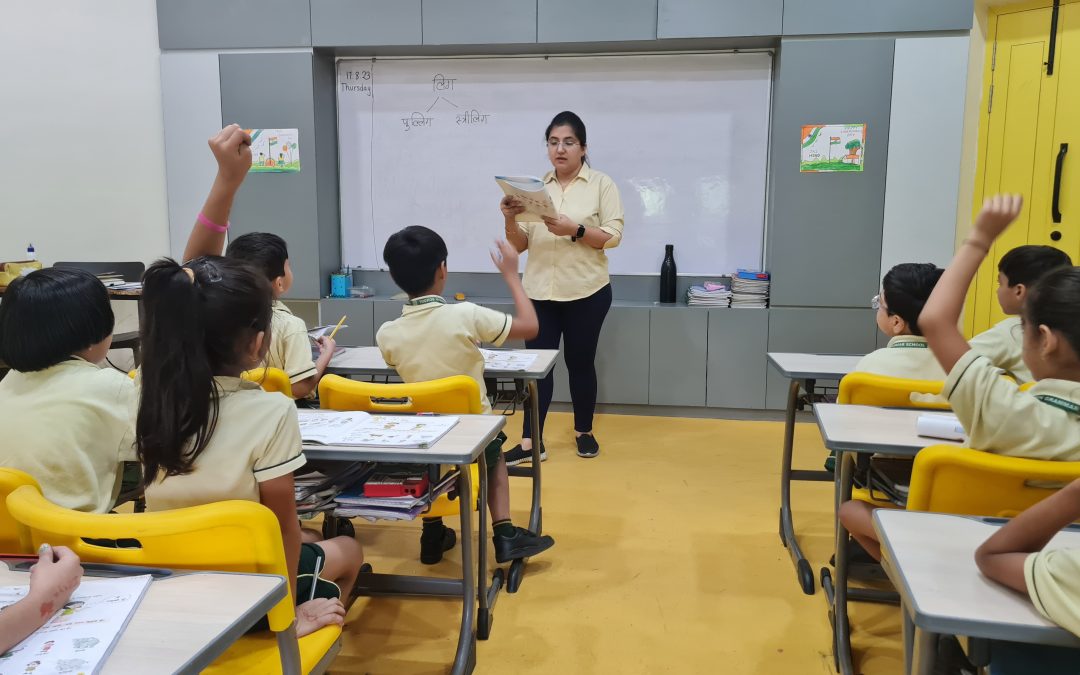
While academic results, infrastructure, curriculum, sports facilities and extracurricular activities are all important considerations when shortlisting a school, there is another factor that deserves equal attention: the teacher-student ratio.
A school may have excellent infrastructure and a modern curriculum, but the quality of a child’s everyday learning experience also depends on how much attention teachers can give to individual students.
The teacher-student ratio essentially refers to the number of students assigned to a teacher. A well-balanced ratio can make it easier for teachers to understand students’ learning needs, identify areas where they need support, encourage participation and provide meaningful feedback.
For parents searching for a CBSE school in Faridabad, understanding the importance of teacher-student ratio can help them look beyond advertisements and evaluate what the classroom experience may actually be like.
At Homerton Grammar School, personalised attention is an important part of the school’s approach to learning. The school currently highlights a 30:1 student-teacher ratio as part of its commitment to ensuring that students receive meaningful attention in the classroom.
But why does this matter so much?
What is teacher-student ratio?
The teacher-student ratio is a simple way of understanding how many students a teacher is responsible for.
For example, if a classroom has 30 students and one teacher, the ratio is 30:1. A smaller ratio generally means that a teacher has fewer students to engage with, although the ratio alone does not determine the quality of education.
The effectiveness of a classroom also depends on teacher experience, teaching methods, classroom resources, curriculum design, student needs and the overall school environment.
CBSE’s teacher guidance has highlighted the importance of class size and student-teacher ratio, noting that section restrictions exist with the objective of ensuring adequate attention to each child. Its Teachers Handbook also states a student-teacher ratio of no more than 30:1 under the cited affiliation provisions.
For parents, therefore, the ratio should be considered alongside other factors when evaluating a school.
1. More individual attention
Every child learns differently. Some students understand a concept quickly, while others may need additional explanations, examples or practice. Some children are naturally comfortable asking questions, while others may take time to speak up in class.
In a classroom where teachers can devote meaningful attention to individual students, it becomes easier to recognise these differences.
A balanced teacher-student ratio gives teachers greater opportunity to observe students, interact with them and understand how they are progressing.
At Homerton Grammar School, personalised learning is highlighted as an important part of its educational approach. The school says its student-teacher ratio is designed to make it easier for teachers to consider individual children’s needs and provide appropriate support.
This is particularly important during the formative years when students are developing their academic habits, confidence and attitudes towards learning.
2. Better understanding of each child’s learning needs
Children do not learn in the same way. One student may enjoy reading and writing, another may learn better through visual activities, while another may understand concepts more effectively through experiments, projects or practical experiences.
Teachers need to observe these differences to make learning more meaningful.
A manageable class size can help teachers identify where students are performing well and where they may require additional support. It can also help teachers recognise changes in participation, confidence or classroom engagement.
This does not mean that a smaller ratio automatically guarantees better learning. Rather, it creates conditions in which teachers can potentially spend more meaningful time understanding their students.
For parents, this is an important question to ask when visiting a school in Faridabad: Will my child simply be one among many students, or will teachers have opportunities to understand their individual learning journey?
3. Encourages students to ask questions
A healthy classroom is one where students feel comfortable asking questions.
Questions are an important part of learning because they show curiosity and encourage students to think beyond memorising information. However, in a very crowded classroom, some students may hesitate to raise their hands or may not receive enough time to clarify their doubts.
With a balanced teacher-student ratio, teachers can create more opportunities for discussion, interaction and feedback.
At Homerton Grammar School, the emphasis on student-centric and personalised learning supports an environment where students are encouraged to participate actively rather than simply listen passively.
This can be especially valuable in subjects where conceptual understanding is important. Instead of moving from one topic to another without checking comprehension, teachers can identify areas that require further explanation.
4. Supports personalised learning
Modern education is increasingly moving beyond a one-size-fits-all approach. Students are expected to develop critical thinking, creativity, communication, collaboration and problem-solving abilities alongside academic knowledge. This requires teachers to understand students as individuals.
Personalised learning does not necessarily mean creating a completely different lesson for every student. It can involve adapting explanations, offering additional support, providing enrichment activities, asking differentiated questions and giving students different ways to demonstrate understanding.
A healthy teacher-student ratio can make such practices more manageable.
For a CBSE school in Faridabad, this is particularly relevant as schools increasingly integrate experiential learning, projects, technology and interdisciplinary activities into classroom experiences.
5. Helps teachers provide meaningful feedback
Feedback is one of the most important parts of learning. Students need to know not only what they got wrong but also how they can improve.
Effective feedback can help a student understand:
- What they are doing well
- Where they need improvement
- How they can correct mistakes
- What they should focus on next
- How they can develop better learning habits
When teachers have a manageable number of students, providing personalised feedback can become more practical.
Feedback can happen through classroom discussions, assignments, projects, assessments, presentations and one-to-one interactions.
For parents evaluating the best school in Faridabad for their child, it is worth asking how teachers communicate progress and whether students receive meaningful guidance beyond examination marks.
6. Builds stronger teacher-student relationships
Education is not only about delivering lessons. Relationships matter too.
Students are more likely to engage actively when they feel that their teachers understand and support them. A positive teacher-student relationship can encourage students to communicate their concerns, seek help and participate more confidently in classroom activities.
A manageable student-teacher ratio can give teachers more opportunities to interact with individual students. This is particularly important for children who may be shy, hesitant or less likely to ask for help independently.
At Homerton Grammar School, the emphasis on individual attention reflects the belief that students should be recognised not merely as members of a class but as individuals with different strengths, interests and needs.
7. Supports confidence and classroom participation
Confidence develops when students feel that their ideas are valued. A child who receives encouragement from teachers may become more comfortable answering questions, participating in discussions, presenting projects and sharing creative ideas.
These experiences can have benefits beyond academics. Classroom participation can strengthen communication skills, public speaking, collaboration and decision-making. Over time, these abilities can contribute to a student’s overall personality development.
This is one reason parents should consider teacher-student ratio when selecting a school. They should look at whether the school’s classroom environment allows students enough opportunities to participate.
8. Makes experiential learning more effective
Education today is increasingly focused on learning by doing. Students may work on science experiments, robotics projects, presentations, group assignments, art projects, coding activities and other hands-on experiences.
Such activities require teachers to observe students closely, guide them through challenges and provide feedback.
A manageable classroom can make it easier for teachers to monitor group work and support students during practical activities. This becomes particularly relevant for schools that offer future-focused learning opportunities.
At Homerton Grammar School, students have access to learning opportunities involving technology, robotics, artificial intelligence and coding, alongside academic and co-curricular activities. A supportive classroom environment can help students make better use of such opportunities.
9. Helps identify learning gaps earlier
One of the advantages of regular teacher-student interaction is that teachers can potentially identify learning gaps earlier.
A student may appear to be performing adequately in examinations while still struggling with a particular concept. Regular observation, questioning, classwork and interaction can help teachers identify these areas.
Early identification gives students an opportunity to receive additional support before a small difficulty becomes a larger academic challenge.
For parents, this is an important aspect of choosing a school. Academic support should not begin only when examination results reveal a problem. Continuous observation and feedback can help students improve throughout the year.
10. Supports holistic development
A good school is not defined only by examination results. Students also need opportunities to develop communication skills, creativity, leadership, teamwork, physical fitness, emotional awareness and problem-solving abilities.
Teacher-student relationships can influence many of these areas.
Teachers often observe students during classroom activities, group projects, presentations, sports-related activities and other school experiences. When teachers have sufficient opportunity to interact with students, they can encourage strengths that may not always be visible through written examinations.
This aligns with the broader expectations of CBSE-affiliated education, which include experiential learning, physical and health education, life skills, digital education and value education alongside academic learning.
Why teacher-student ratio matters in different stages?
The importance of teacher-student ratio can vary depending on the age of the child.
Early Years
Young children require considerable guidance and attention. They are developing foundational communication, social, motor and learning skills. Teachers need to observe how children interact, communicate and respond to activities. A supportive adult-to-child environment can therefore be particularly valuable during these years.
Primary Years
Primary students are developing core academic skills while becoming more independent learners. Teachers need to identify misconceptions, encourage curiosity and help students develop positive learning habits.
Middle Years
As students enter the middle years, subjects become more complex, and students begin developing stronger individual interests. Teachers can play an important role in helping students understand concepts, develop study habits and explore their strengths.
Senior Years
In senior classes, students face important academic and career-related decisions. They may need guidance regarding subjects, examinations, career pathways, projects and future skills. A supportive teacher-student relationship can help students seek advice and communicate their concerns more confidently.
Is teacher-student ratio the only factor parents should consider?
No.
While teacher-student ratio is important, it should not be used as the only measure of a school’s quality.
Parents should evaluate the complete educational environment.
When comparing CBSE schools in Faridabad, consider:
Teaching quality: Look at the qualifications, experience, teaching approach and professional development of teachers. CBSE requires affiliated schools to have qualified teaching staff and provides requirements concerning teacher training.
Curriculum: Ask whether the curriculum encourages conceptual understanding, creativity, critical thinking and practical learning.
Infrastructure: Explore classrooms, laboratories, libraries, technology facilities, sports infrastructure and creative spaces.
Student well-being: Understand how the school supports students’ emotional, physical and social well-being.
Sports and co-curricular activities: A child’s development should include opportunities beyond academics. Sports, arts, music, technology and other activities can help students discover their interests and develop new skills.
Parent-school communication: Parents should also understand how the school communicates academic progress, behaviour, activities and areas requiring support.
School culture: Perhaps most importantly, observe how students and teachers interact. A welcoming, respectful and encouraging environment can significantly influence a child’s school experience.
What parents should ask during a school visit?
When visiting a school, don’t hesitate to ask specific questions about teacher-student ratio.
Parents can ask:
- What is the average class size?
This provides a clearer picture of the number of students a teacher handles in a typical classroom - How does the school provide individual attention?
A ratio is meaningful only when it translates into actual classroom support - How are students who need additional help supported?
Ask about remedial support, additional guidance and communication with parents - How do teachers provide feedback?
Find out whether feedback is limited to examination results or happens continuously - How does the school support advanced learners?
Students who learn quickly also benefit from enrichment opportunities and greater challenges - How does the school encourage classroom participation?
A good classroom should give students opportunities to ask questions, collaborate and express their ideas
Homerton Grammar School: Where every student matters
For families exploring schools in Faridabad, the teacher-student ratio is an important factor to consider alongside academics, infrastructure, sports, technology and holistic development.
Homerton Grammar School places emphasis on personalised learning and meaningful student-teacher interaction. Its current school communication highlights a 30:1 student-teacher ratio as part of its approach to ensuring students receive attention in the classroom.
The school’s educational environment combines academics with opportunities in technology, robotics, sports, arts, music and other areas of student development.
The objective is not simply to create students who perform well in examinations, but to encourage children to become confident learners who can think independently, communicate effectively, collaborate with others and explore their interests.
Ultimately, the right school is one where a child is seen, heard, supported and encouraged to grow.
Final thoughts: Look beyond the numbers
Teacher-student ratio is more than a number on a school brochure. It can influence how much time teachers have to interact with students, how easily they can identify learning needs, how frequently students receive feedback and how comfortable children feel participating in the classroom.
However, parents should remember that a good ratio works best when combined with qualified teachers, strong pedagogy, a relevant curriculum, effective infrastructure and a positive school culture.
When searching for a CBSE school in Faridabad, take the time to visit schools, observe classrooms, speak with educators and understand how the school translates its student-teacher ratio into meaningful learning experiences.
At Homerton Grammar School, the focus on personalised attention is part of a broader commitment to helping students learn, explore and grow in a supportive environment.
Because every child deserves more than a seat in a classroom.
Every child deserves to be known, encouraged and given the opportunity to reach their potential.
And that is why the teacher-student ratio matters when choosing a school.